
Orlando Violation of Probation Defense Lawyers
Violation of Probation Defense Attorneys, proudly serving Orlando, Winter Park, Maitland, Longwood, Altamonte Springs, Orange County and Central Florida.
Orlando Probation Violation Lawyer
In Florida, a Violation of Probation (VOP) is a legal emergency that carries a high risk of immediate incarceration. Unlike a new criminal charge, where you are presumed innocent, a VOP puts you in a position where the burden of proof is much lower, and your constitutional right to a jury trial does not apply.
If a judge finds that you willfully and substantially violated your probation terms, the court can revoke your probation and sentence you up to the statutory maximum for the original offense. For many people in Orlando and Central Florida, a VOP report results in a “No Bond” warrant, which means you could remain in county jail until your final hearing.
Immediate action by an experienced Orlando probation violation lawyer is often the best way to seek bond, resolve the warrant, and present a defense focused on whether the alleged violation was truly willful. Whether you are facing a technical violation or a new law violation, the goal is to protect your freedom and pursue reinstatement or termination of supervision instead of a jail or prison sentence.
What Is a Violation of Probation in Florida?
Probation is considered a grace or second chance granted by the court. It allows a person to serve a sentence in the community instead of in jail or prison.
Probation is a form of court-ordered supervision. Although you are allowed to remain at home, you must meet regularly with a probation officer and follow strict conditions. Under Florida law, a violation occurs when you fail to follow those conditions in a willful and substantial way. In other words, if you intentionally break the rules or violate them in a significant way, your freedom is at risk.
Getting Started
Once a judge places someone on probation, the requirements begin immediately. Usually, the person must report to a probation officer within 24 hours of sentencing. During that first meeting, the officer explains the process and reviews every rule the person must follow.
Common Conditions of Probation
- Standard conditions: Reporting monthly to an officer, staying within a specific county, and maintaining lawful employment.
- Financial obligations: Paying court costs, restitution, and monthly supervision fees.
- Special conditions: Completing drug treatment, following no-contact orders, or performing community service hours.
Why a Violation Is Dangerous
The greatest danger in a probation violation case is not just the allegation itself, but the immediate consequence. If a judge finds that you violated probation, the court can revoke your supervision and take away your freedom. Instead of simply finishing the time left on probation, you could be sentenced to jail or prison for up to the statutory maximum of the original offense.
Types of Probation and Community Supervision in Florida
Florida law recognizes several forms of supervision, including regular probation, administrative probation, community control, drug offender probation, mental health probation, and sex offender probation or sex offender community control.
Regular probation requires reporting and compliance with court-ordered conditions. Administrative probation is a no-contact, nonreporting form of supervision generally used for lower-risk individuals. Community control is a more restrictive form of supervised custody in the community. Drug offender probation and sex offender probation are specialized forms of intensive supervision that involve treatment and closer monitoring.
Types of Probation Violations in Florida
Florida law generally places probation violations into two main categories: technical violations and new law violations.
A technical violation is a violation of supervision that does not involve a new felony, misdemeanor, or criminal traffic offense. Examples include missing appointments, failing to complete treatment, testing positive for controlled substances, or breaking other supervision rules.
A new law violation involves alleged criminal conduct while on probation. A conviction is not required for that conduct to support a probation violation.
Violation of Probation Procedure and Bond
A VOP case usually begins with an affidavit alleging a violation of probation or community control. If the violation is not admitted, the court may hold the defendant in custody or release the person with or without bail pending a further hearing. In some felony VOP cases, Florida law limits pre-hearing release. If probation is ultimately revoked, the court may impose any sentence it could have originally imposed for the underlying offense.
What Happens After a Probation Violation Is Reported?
When a probationer is accused of violating supervision in a material way, Florida law allows several different procedures depending on the type of alleged violation.
Step 1: The Violation Is Reported or Alleged
A probation violation case may begin when a probation officer prepares and submits an affidavit alleging a violation, or when a probation officer or law enforcement officer makes a warrantless arrest based on reasonable grounds to believe a material violation occurred. In technical violation cases, the probation officer must first determine whether the person is eligible for Florida’s alternative sanctioning program.
Step 2: Judicial Action
If the court receives an affidavit showing reasonable grounds to believe a material violation occurred, the judge may issue an arrest warrant. Instead of a warrant, the judge may issue a notice to appear if the probationer has never been convicted of, and is not currently alleged to have committed, a qualifying offense under section 948.06.
Step 3: Custody, Bail, or Further Hearing
If the violation is not admitted, the court may keep the probationer in custody or release the person with or without bail pending a further hearing. In certain felony probation cases, Florida law restricts release and bail.
Alternative Sanctioning Program Under Section 948.06
Florida law requires each judicial circuit to create an alternative sanctioning program for certain eligible technical violations. The chief judge of the circuit may set additional sanctions, eligibility requirements, and reporting procedures by administrative order.
The program is voluntary and available only for eligible low-risk or moderate-risk technical violations. It does not apply to new criminal offenses, absconding, stay-away or no-contact violations, certain repeat violators, or cases otherwise excluded by statute.
If an eligible probationer chooses to participate, the person admits the technical violation, agrees to the recommended sanction if approved by the court, and waives the right to counsel, the right to require the State to prove the violation before a neutral hearing body, the right to subpoena witnesses, and the right to confront and cross-examine witnesses.
If the probationer waives or stops participation, the probation officer may move forward with a formal violation report, affidavit, and warrant.
Early Termination of Probation
For defendants sentenced to probation on or after October 1, 2019, the court must either terminate probation early or convert the term to administrative probation if all statutory requirements are met. These include that the probationer has completed at least half of the term, completed all other probation conditions, has not been found in violation based on a filed affidavit during the current term, did not waive eligibility in a negotiated sentence, and is not a violent felony offender of special concern.
This rule does not apply to offenders on community control. Even when a probationer is otherwise eligible, the court may deny early termination or conversion if it makes written findings that continued reporting probation is necessary to protect the community or the interests of justice.
Bond for a Violation of Probation (VOP) in Florida
The rules for bond in a Violation of Probation case are different from the rules that apply to most new criminal charges. In many criminal cases, the Florida Constitution generally gives a person the right to reasonable pretrial release. But when someone is accused of violating probation, there is no automatic right to bond. Instead, the decision is mostly left to the judge.
Under Florida Statute section 948.06, if a person is arrested for violating probation and does not admit the violation, the court may either keep that person in custody or release them with or without bail while the case is pending. This gives the judge broad authority to decide whether the probationer should remain in jail until the hearing or be allowed to return home under certain conditions.
When deciding whether to grant bond in a VOP case, judges usually consider several factors. One of the first is the type of alleged violation. Some are technical violations, meaning the probationer broke a rule of probation but did not commit a new crime. Examples include missing a meeting with a probation officer, failing a drug test, or not completing a required class. Other cases involve new law violations, meaning the probationer is accused of committing a new criminal offense while on probation. Judges are generally more likely to consider bond for technical violations than for new law violations.
The court also looks closely at the original offense that led to probation. If the underlying charge involved violence, a serious felony, or a sex offense, judges are often more cautious about releasing the person on bond. The probationer’s history on supervision also matters. Someone who has followed the rules for a long time and has no prior violations may have a stronger argument for bond than someone who has repeatedly violated probation.
Another factor is the person’s ties to the community. Evidence of steady employment, family responsibilities, and a stable home can help show that the person is unlikely to flee and is committed to following court orders. Judges also consider public safety and whether release would pose a danger to others.
In many cases, the court also considers the recommendations of the State Attorney and the probation officer. While the judge makes the final decision, those recommendations can influence whether bond is granted.
The likelihood of receiving bond often depends on the type of violation. Technical violations, such as missing an appointment or failing to pay fees, may sometimes result in release with bond or a notice to appear. In contrast, violations based on new criminal charges are usually treated more seriously, and courts are more likely to keep the probationer in custody.
Florida law also creates stricter rules for certain offenders known as Violent Felony Offenders of Special Concern (VFOSC) under Florida Statute section 948.06. If a probationer falls into this category and is accused of violating probation, the court must follow special procedures before allowing release. In many of these cases, the judge cannot release the person until a hearing is held and the court determines that the person does not pose a danger to the community. This rule commonly applies to people whose original offenses involved serious violent crimes such as murder, sexual battery, robbery, carjacking, aggravated battery, or aggravated stalking.
Ultimately, the judge acts as the gatekeeper in a probation violation case. Because bond is discretionary, the outcome often depends on how clearly the defense can show that the alleged violation was not serious, that the probationer has generally complied with supervision, and that release will not create a risk to the community. Strong information about employment, family support, and compliance with probation conditions can improve the chances that a judge will grant bond while the case moves forward.
Violation of Probation (VOP) Hearings in Florida
A Violation of Probation hearing in Florida is different from a normal criminal trial. When someone is on probation, that person has already been convicted of a crime and is serving a sentence under supervision in the community. Because probation is considered a form of conditional liberty, the legal protections in a VOP hearing are more limited than in a standard criminal case.
VOP Hearing vs. Criminal Trial
In a VOP hearing, the judge decides the case without a jury. The judge listens to the evidence, decides whether a violation occurred, and determines the appropriate punishment if the violation is proven.
Another major difference is the burden of proof. In a criminal trial, prosecutors must prove guilt beyond a reasonable doubt, which is the highest legal standard. In a VOP hearing, the State only has to prove the violation by the greater weight of the evidence, sometimes described as a preponderance of the evidence. This means the judge must find that it is more likely than not that the probationer committed a willful and substantial violation of probation.
The rules of evidence are also more relaxed in a VOP hearing. For example, hearsay evidence may be considered by the judge, even though hearsay is usually not allowed in a jury trial. However, under Florida law, hearsay cannot be the only evidence used to prove a violation. The State must present at least some reliable non-hearsay evidence to support the allegation.
Probationers also continue to have Fifth Amendment rights against self-incrimination. A person accused of violating probation cannot be forced to testify about conduct that could incriminate them in a separate criminal case. However, the court may question a probationer about compliance with probation conditions, especially when the alleged violation involves technical issues such as missed appointments or failure to complete required programs.
Another important difference involves timing. There is generally no statute of limitations for pursuing a probation violation as long as the court issues the violation warrant before the probation period expires. Once the warrant is issued, the court keeps jurisdiction to resolve the violation even if the hearing takes place after the probation term would otherwise have ended.
Possible Outcomes of a VOP Hearing
If the judge finds that a probation violation occurred, the court has several options depending on the seriousness of the violation and the probationer’s history.
Reinstatement of Probation
The judge may allow the person to continue probation under the same conditions as before. This is more common when the violation is minor and the probationer quickly corrected the issue.
Modification of Probation
The court may decide to change the terms of probation by adding stricter requirements. For example, the judge may extend the probation period, require additional treatment programs, impose electronic monitoring, or order more community service.
Revocation of Probation
The most serious outcome is revocation of probation. If probation is revoked, the judge cancels the probationary sentence and imposes a new sentence for the original crime. Under Florida law, the judge may impose any sentence that could have originally been imposed for the underlying offense, subject to the Florida Criminal Punishment Code.
For example, if the original charge was a third-degree felony punishable by up to five years in prison, the judge could revoke probation and sentence the defendant to up to five years, with credit for any jail time already served.
Key Legal Points About Evidence
Florida courts have established important rules about evidence in VOP hearings. While hearsay may be considered, it cannot be the sole basis for finding a violation. There must be some non-hearsay evidence supporting the allegation.
Courts also require that a violation be both willful and substantial. This means the State must show that the probationer intentionally failed to follow probation conditions and that the violation was serious enough to justify court action.
Defenses to a Violation of Probation in Florida
In Florida, a judge cannot revoke probation for just any mistake. A probation violation must be both willful and substantial before the court can revoke probation. This means the State must show that the person intentionally violated a probation condition and that the violation was serious enough to justify court action.
If you are accused of a VOP, the defense often focuses on showing that the alleged violation was not intentional, was outside of your control, or did not actually happen.
The “Willful and Substantial” Legal Standard
To prove a probation violation, the State must show by the greater weight of the evidence that the violation was willful and substantial. In simple terms, the judge must believe it is more likely than not that the probationer intentionally broke the rules of probation.
If the violation was accidental, unavoidable, or based on incorrect information, the court may decide that probation should not be revoked.
Lack of Willfulness
One of the most common defenses is showing that the violation was not willful. If a probationer made a good-faith effort to follow the rules but was prevented by circumstances outside that person’s control, the violation may not meet the legal standard.
For example, missing a meeting with a probation officer may not be considered willful if the person was hospitalized, dealing with a documented medical emergency, or facing an unexpected crisis. Transportation problems, verified work conflicts, or other unavoidable circumstances may also support this defense if properly documented.
The key issue is whether the probationer intended to violate probation or made reasonable efforts to comply.
Inability to Pay
Another common defense involves financial obligations such as restitution, court costs, or supervision fees.
Florida law recognizes that a person cannot be jailed simply because that person is unable to pay. Courts have held that probation cannot be revoked for nonpayment unless the failure to pay was willful.
If the State shows that a required payment was not made, the probationer can present evidence showing an inability to pay despite good-faith efforts. This may include proof of unemployment, medical problems, or attempts to find work.
If the court finds that the person truly lacked the ability to pay, the judge must consider alternatives to incarceration.
Challenging the Evidence
A defense may also focus on the evidence used to support the alleged violation.
VOP hearings allow the judge to consider some types of evidence that would normally be restricted in a jury trial. For example, hearsay may be presented. However, Florida law is clear that hearsay alone cannot be the sole basis for finding a probation violation. The State must provide some reliable, non-hearsay evidence to support its claim.
In some cases, the defense may challenge the reliability of drug testing procedures, question how evidence was handled, or argue that witnesses do not have direct knowledge of the alleged violation.
Defenses to Technical Violations vs. New Law Violations
The type of violation often affects the defense strategy.
For technical violations, the defense may focus on proving that the probationer actually complied with the condition or that the violation was minor or unintentional. For example, documents may show that a required class was completed or that community service hours were properly performed.
For new law violations, the defense may focus on the facts of the alleged offense. In those cases, the defense may argue mistaken identity, lack of evidence, or other issues related to the alleged new crime.
Mitigation and Proactive Steps
Even when a violation may have occurred, taking proactive steps can sometimes reduce the consequences.
For example, completing missed community service hours before the hearing, enrolling in treatment programs, or correcting a missed requirement may show the court that the probationer is taking responsibility. These actions can sometimes persuade the judge to modify probation instead of revoking it.
Attorneys may also negotiate with prosecutors to seek modification of probation conditions instead of revocation and incarceration.
Fifth Amendment Rights in a VOP Hearing
A probationer still has constitutional protections during a violation hearing. The Fifth Amendment protects people from being forced to incriminate themselves.
If the alleged violation involves a new criminal offense, the probationer has the right to remain silent to avoid harming the defense in that separate case. Courts are generally careful to avoid forcing testimony that could directly incriminate the person in a new criminal prosecution.
Speak With an Orlando Probation Violation Lawyer Today
If you think a warrant has been issued or your probation officer has threatened a VOP, do not wait for police to come to your door. The AM Lawyer P.A.: Domestic Violence & Criminal Defense Attorneys is available 24/7 for emergency consultations.
Contact us today at (407) 487-2087 for a free, confidential case review.
The AM Lawyer P.A.: Domestic Violence & Criminal Defense Attorneys
Located in: Day Building
Address: 605 E Robinson St #250, Orlando, FL 32801
Phone: (407) 487-2087
Hours: Open 24 hours
Orlando Criminal Defense Attorneys
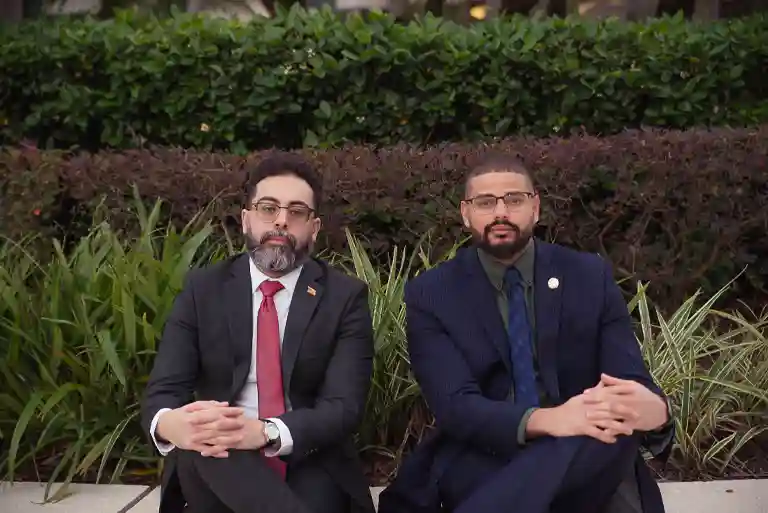
At The AM Lawyer P.A. in Orlando, Florida, we are dedicated to delivering the highest level of legal representation to our clients. Led by Mr. Pedro Matos and Mr. Gilbert Arroyo, both highly experienced defense attorneys, our team has successfully handled thousands of cases throughout the state.
We understand that navigating the legal system can be overwhelming and stressful. That’s why we are committed to making the process as seamless and stress-free as possible. Our dedicated team will fight for your rights and guide you every step of the way.
Types of Criminal Cases Our Orlando Criminal Lawyers Can Help You With:
Domestic Violence • Fraud • Petit Theft • Vandalism • Murder • Drug Charges • Possession of Cocaine • Drug Trafficking • Embezzlement • Sexual Assault • Stalking • Arson • Human Trafficking • Tresspass • Attempted Murder • Driving Under the Influence (DUI) • Aggravated Assault • Aggravated Battery • Assault • Battery • Boating Under the Influence (BUI) • Burglary • Child Neglect • Disorderly Conduct • Driving While License Suspended • Failure to Appear • False Imprisonment • Grand Theft • Grand Theft Auto • Habitual Traffic Offender • Kidnapping • Manslaughter • Possession of Marijuana • Property Damage • Reckless Driving • Retail Theft • Robbery • Speeding • Violation of Probation, and more.

What Our Clients Say
Real results and genuine testimonials from clients we’ve successfully represented
Schedule Your Free Consultation
Facing criminal charges or domestic violence allegations? Get expert legal guidance from experienced trial attorneys. We’re available to provide immediate help.