

Protective Order Violation Orlando: Your Defense
Key Takeaways
Protective orders typically remain in effect for two years unless the judge specifies a shorter duration.
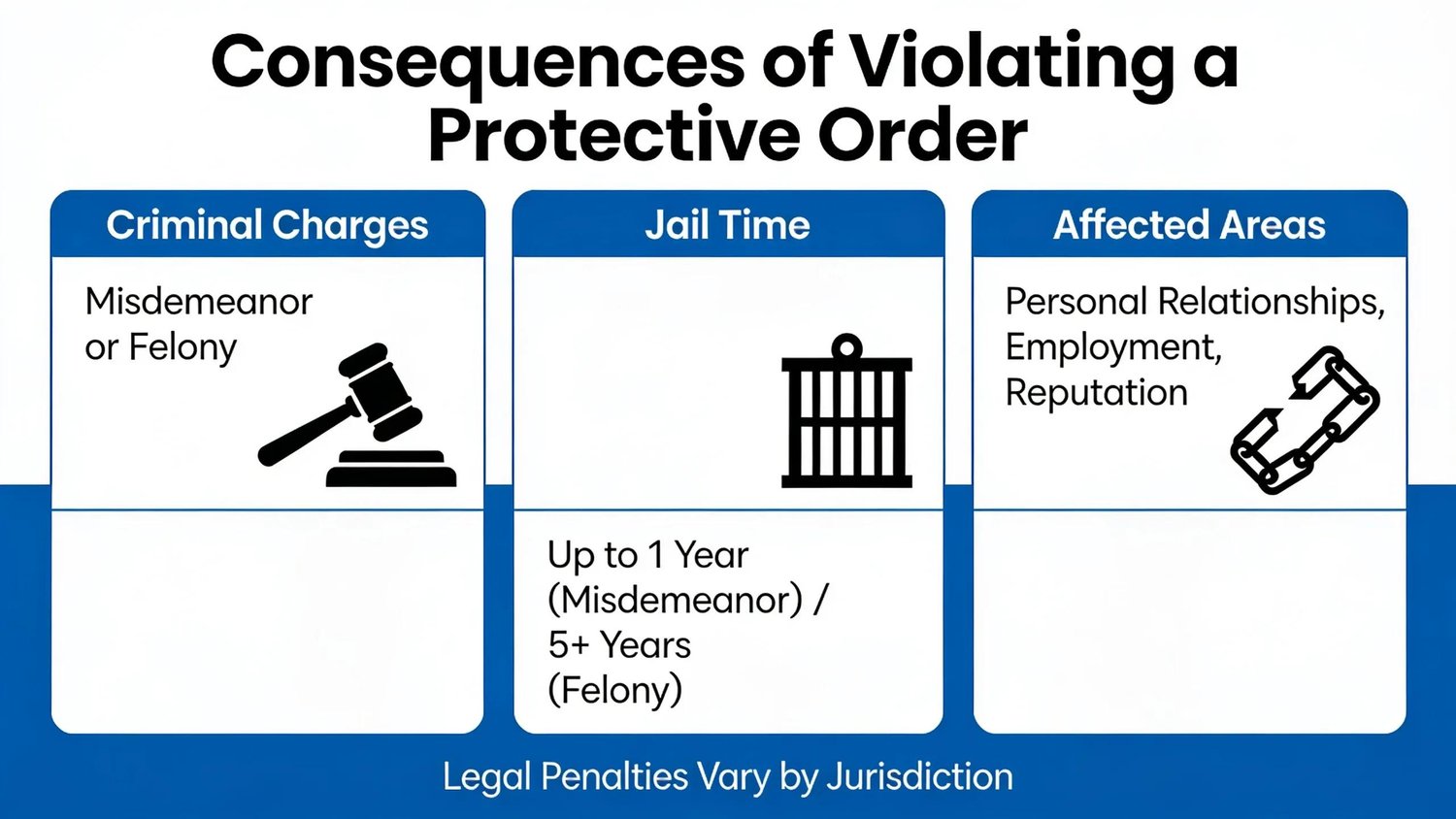
Violating a restraining order carries serious legal consequences including potential criminal charges and penalties.
Defendants with protective orders against them risk losing parental rights and custody of children.
Protective orders prohibit direct contact, approach, or harassment of the protected person or family members.
What Happens When You Violate a Protective Order?
Does a Civil Order Become a Criminal Matter Once Violated?
What Penalties Can a Protective Order Violation Carry?
Criminal charges filed by the state, independent of the original petitioner's wishes
Potential jail time, depending on the nature and severity of the alleged violation
Loss of custody or visitation rights in related family court proceedings
Restrictions on housing, employment, and professional licensing
Escalating penalties for repeat violations
What Is a Protective Order Under Florida Law?
What Can a Protective Order Prohibit?
Direct or indirect contact with the protected individual
Approaching or entering the protected person's residence
Coming near the protected person's school or workplace
Any form of communication, including electronic contact
Who Issues Protective Orders in Florida?
What Are the Penalties for a Protective Order Violation?
Does a Protective Order Violation Affect Child Custody?
Will a Violation Show Up on a Background Check?
Imprisonment (length varies by charge severity and prior record)
Heavy monetary fines
Potential escalation to felony charges for repeat violations
Loss of child visitation rights
Loss of child custody
Termination or restriction of parental rights
Forfeiture of use or possession of community property
What Defense Strategies Apply to Violation Charges?
What Happens If a Client Contacts an Attorney Before Charges Are Filed?
Lack of knowledge — whether the accused was properly notified of the order's specific terms
Absence of willful contact — whether any communication was accidental or initiated by the protected party
Order validity — whether the protective order was legally issued and properly served
Insufficient evidence — whether the prosecution's evidence actually establishes a violation beyond a reasonable doubt
How Aggressive Does a Defense Need to Be?
How Does the 9th Judicial Circuit Handle These Cases?
Which Counties Fall Under the 9th Judicial Circuit's Jurisdiction?
Why Does Local Court Knowledge Matter in These Cases?
Prosecutor tendencies in Orange and Osceola county courtrooms
Judicial preferences regarding evidence presentation and procedural motions
Court-specific procedures across Orlando, Winter Park, Maitland, Longwood, and Altamonte Springs
Can Indirect Contact Still Violate a Protective Order?
What Types of Contact Does a Protective Order Prohibit?
Sending messages through a third party or intermediary
Calling, texting, or emailing the protected person directly
Approaching the protected person's home, workplace, or school
Using social media to communicate or make contact indirectly
Does the Protected Person's Consent Change Anything?
Why Does Early Legal Intervention Matter Most?
What Happens If Someone Waits to Hire a Defense Attorney?
How Does a Former Prosecutor's Perspective Help the Defense?
Immediate intervention — engaging with the case before the prosecution's narrative hardens
Rights protection — ensuring clients understand and assert every procedural protection available under Florida law
Practical guidance — providing clear next steps at every stage so clients are never left uncertain about what comes next
How Can The AM Lawyer Help Your Defense?
Case volume and experience: The AM Lawyer, P.A. has handled thousands of cases statewide, building deep familiarity with Central Florida courts, prosecutors, and judges.
Around-the-clock access: Free consultations are available 24 hours a day, 7 days a week, so clients facing urgent arrest situations never wait until business hours to speak with an attorney.
Bilingual representation: Legal services are provided in both English and Spanish, ensuring that diverse clients fully understand every stage of their defense.
Local presence: The firm operates from 605 E Robinson St # 250 in Orlando's Day Building, placing attorneys close to the courts where these cases are decided.