

Sentencing alternatives in Orlando's 9th Judicial Circuit allow nonviolent drug offenders to seek treatment instead of incarceration through structured court motions. Programs like drug court, probation, and diversion give defendants access to rehabilitation. The AM Lawyer, P.A., led by Pedro A. Matos and Gilbert R. Arroyo, evaluates eligibility and advocates for these options in Orange and Osceola County courts.

Key Takeaways on Drug Sentencing Alternatives in Orlando

  • Florida law provides sentencing alternatives that help defendants avoid incarceration for drug offenses in Orlando.
  • Alternative sentencing programs address overcrowded prisons by redirecting nonviolent offenders toward treatment and rehabilitation services.
  • Sentencing alternatives enable individuals charged with drug crimes to pursue court-approved options instead of jail time.
  • Orlando courts recognize that rehabilitation programs serve defendants better than traditional incarceration for substance-related offenses.

What Will You Accomplish With This Guide?

This guide equips Orlando defendants and their families with a clear roadmap for pursuing drug diversion in Orlando instead of jail time. Facing a non-violent drug charge in Orange County carries real stakes: a conviction can mean lost employment, a permanent record, and months away from family. Readers who understand their options early position themselves to avoid those outcomes and move toward treatment rather than incarceration.

Sentencing alternatives exist throughout Orlando and Central Florida specifically to help defendants sidestep prison in appropriate cases. These alternatives are not automatic, however. Knowing which path fits a given case. When to request it, makes the difference between a resolved matter and years of lingering consequences.

How Does Legal Guidance Fit Into This Process?

An evaluation of the facts, criminal history, and charge type determines whether drug court alternatives in Orlando or standard probation for a drug offense in Orlando make more sense. The AM Lawyer, P.A. offers free initial consultations to walk through these options before any plea gets entered. Because plea decisions are often irreversible, that conversation should happen before signing anything.

By the end of this guide, readers will know:

  • How diversion programs differ from drug court and probation
  • What eligibility factors Orange County typically considers
  • Why timing a motion for alternative sentencing matters
  • When to call for a confidential case review
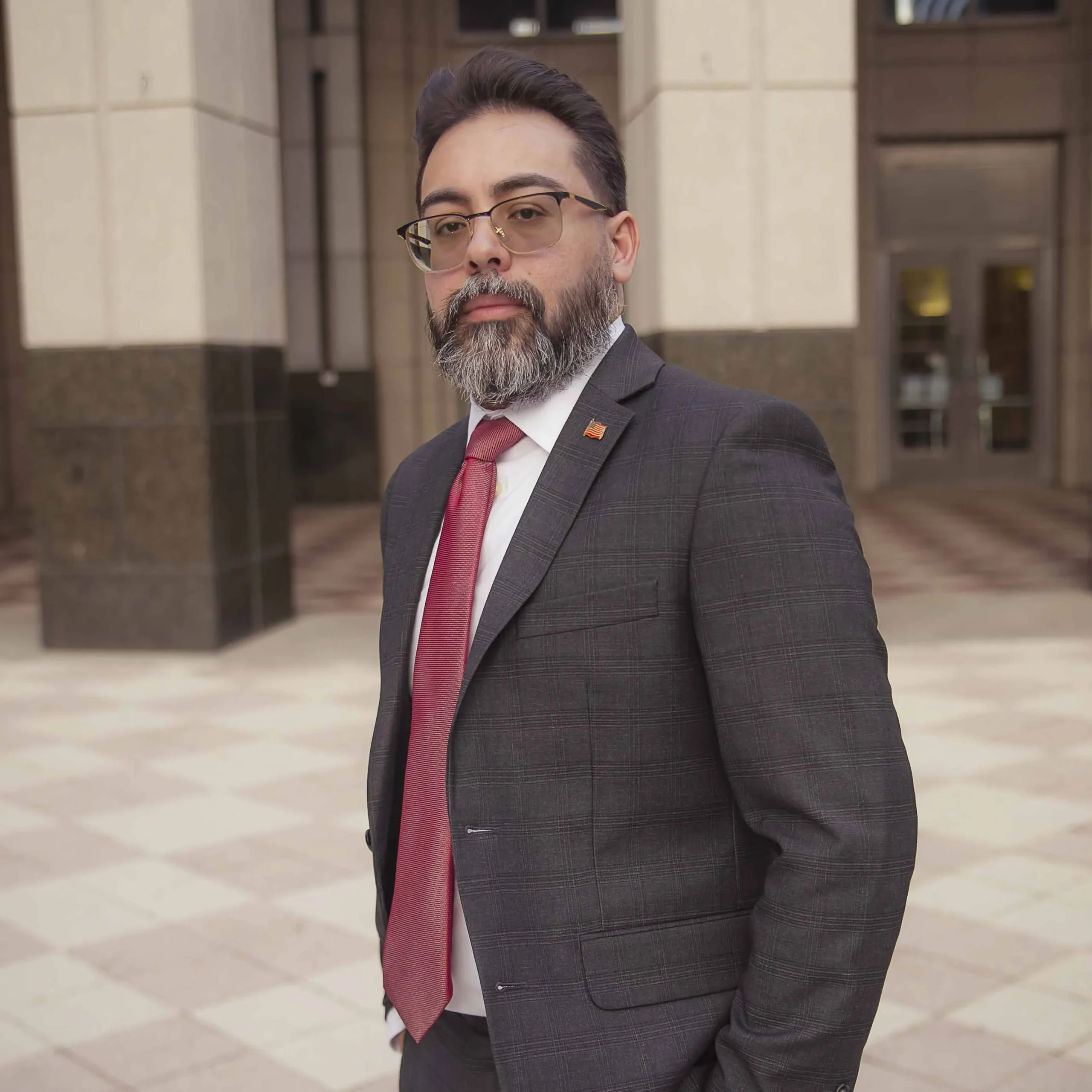
The firm's bilingual defense team, led by former prosecutor Pedro A. Matos and trial attorney Gilbert R. Arroyo, protects client rights across the 9th Judicial Circuit. Confidential evaluations remain available around the clock for families researching options after an arrest.

Pedro A. Matos, attorney with The AM Lawyer, P.A. in Orlando, Florida, stands

What Alternatives to Incarceration Exist in Orlando?

Several sentencing alternatives exist for nonviolent drug offenders facing charges in Orange County, each designed to address treatment needs instead of jail time. Courts across the 9th Judicial Circuit weigh the severity of the offense and the defendant's criminal history before approving any alternative path. Losing this option often means mandatory jail time, a permanent record, and disrupted employment or family stability.

Depending on circumstances, judges may approve probation, community service, work release, court-ordered restitution, or inpatient treatment for drug and alcohol dependency. Probation for a drug offense in Orlando typically includes regular check-ins, drug testing, and compliance conditions set by the court. Work release allows defendants to maintain employment while satisfying supervision requirements. Inpatient treatment addresses the underlying substance issue directly, which courts increasingly view as central to reducing repeat offenses.

How does drug diversion work in Orlando?

Drug diversion in Orlando redirects eligible defendants away from traditional prosecution and toward treatment-based resolution. Qualification depends on the nature of the charge and the individual's prior record. A clean track record through the program can result in reduced or dismissed charges.

Are there drug court alternatives in Orlando for repeat offenders?
Drug court alternatives in Orlando may remain available even for defendants with prior offenses, though eligibility narrows as criminal history grows. Judges evaluate each case individually rather than applying blanket rules.

Based in Orlando, FL, The AM Lawyer, P.A. pursues these alternatives on behalf of clients throughout Orange County and the surrounding circuit. The firm's bilingual defense team, led by Pedro A. Matos and Gilbert R. Arroyo, works to protect clients' rights while advocating for alternative sentencing. Free consultations give families the opportunity to learn which program might apply before charges progress further through the court system.

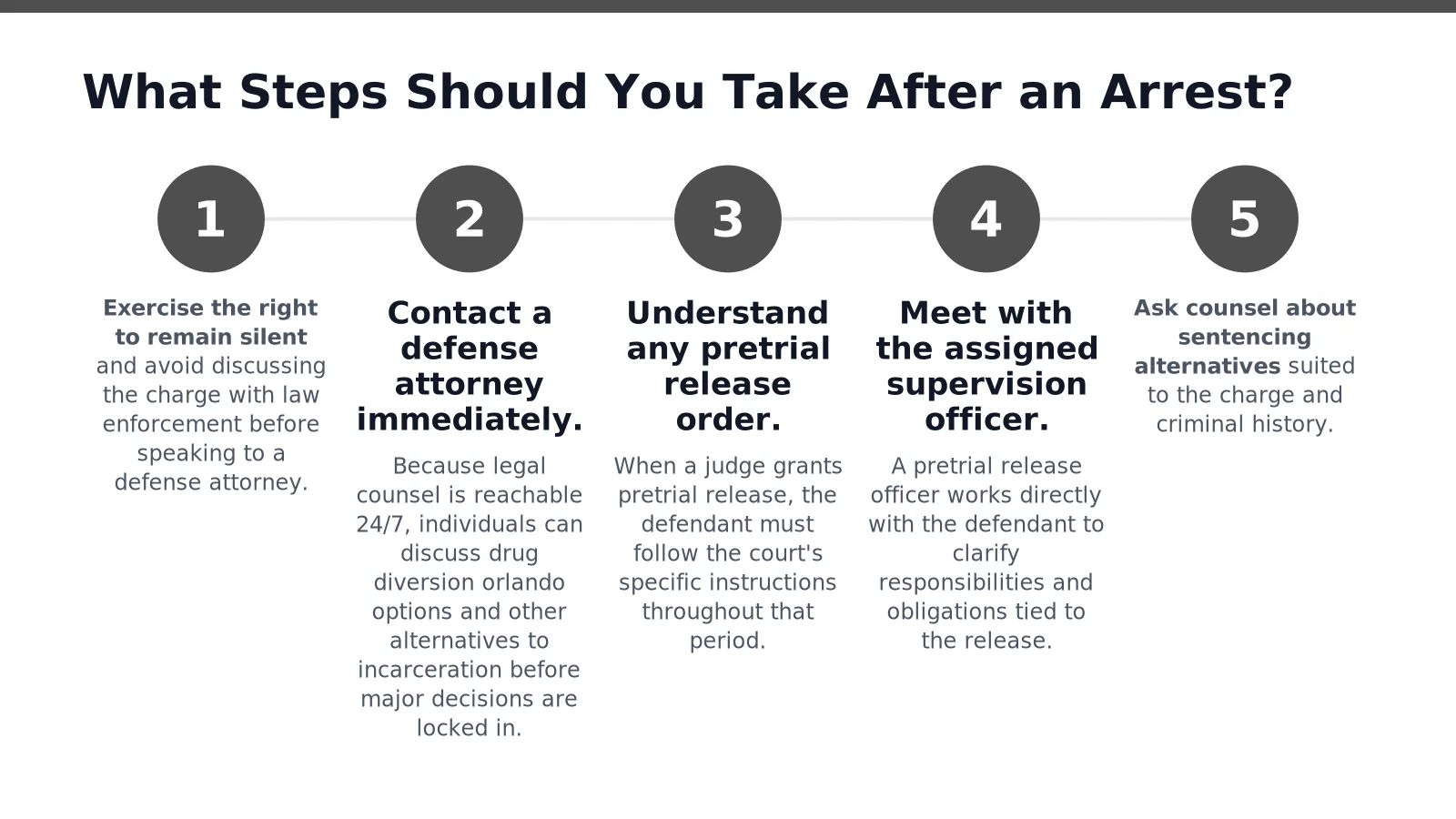
Infographic outlining five steps after an arrest in Orlando, including remaining silent, contacting a defense

What Steps Should You Take After an Arrest?

Five actions matter most following an arrest in Orlando: stay silent, secure counsel, learn the release terms, follow every court instruction, and ask about alternatives to jail time early. Orange County courts recognize sentencing paths that steer nonviolent drug cases away from incarceration. That opportunity narrows the longer a defendant waits to act. Missing an early window can mean losing a treatment-based option in favor of a harsher, default outcome.

  1. Exercise the right to remain silent and avoid discussing the charge with law enforcement before speaking to a defense attorney.
  2. Contact a defense attorney immediately. Because legal counsel is reachable 24/7, individuals can discuss drug diversion orlando options and other alternatives to incarceration before major decisions are locked in.
  3. Understand any pretrial release order. When a judge grants pretrial release, the defendant must follow the court's specific instructions throughout that period.
  4. Meet with the assigned supervision officer. A pretrial release officer works directly with the defendant to clarify responsibilities and obligations tied to the release.
  5. Ask counsel about sentencing alternatives suited to the charge and criminal history.

Can a Drug Charge Be Resolved Without Jail Time?

Central Florida courts, including those handling Orlando cases, recognize sentencing alternatives that may help a defendant avoid jail or prison from the earliest stages of a case. These options often weigh treatment and supervision over incarceration for nonviolent offenses. An attorney evaluates eligibility based on the charge and the defendant's record.

What Happens If Pretrial Release Conditions Are Violated?

Violating pretrial conditions puts continued release, and any chance at drug court alternatives orlando judges may offer, at serious risk. Staying in close contact with the supervision officer and attorney protects that opportunity. Consistent compliance also strengthens eligibility for probation for drug offense orlando instead of confinement.

How Do You Know If You Qualify for Drug Diversion?

Qualification depends on two factors: the nature of the charge and the defendant's criminal record. Orlando residents facing nonviolent drug possession charges often qualify for drug diversion orlando programs, but eligibility is never automatic. A clean review of the facts, done early, determines whether a case fits the criteria courts and prosecutors look for.

The AM Lawyer, P.A.'s attorneys examine the specific facts of each case, alongside the client's prior record, to assess eligibility within the 9th Judicial Circuit. Pedro A. Matos, a former prosecutor, and trial attorney Gilbert R. Arroyo bring firsthand knowledge of how diversion decisions get made from the inside. That perspective matters when building a case for treatment over incarceration.

Does the type of charge affect eligibility?

Yes. Eligibility for drug court alternatives orlando residents pursue generally hinges on whether the underlying offense involved violence. Nonviolent possession charges carry a far stronger chance of qualifying than offenses tied to physical harm or weapons. This distinction shapes nearly every diversion conversation.

What's the first step toward finding out?

A free consultation is typically where the eligibility conversation starts. During this review, the firm evaluates:

  • Criminal history and any prior diversion participation
  • Whether the charge involved violence or weapons
  • Local prosecutorial tendencies for similar drug cases
  • Whether probation for drug offense orlando courts impose fits better than diversion

Being based in Orlando gives the firm direct familiarity with how local prosecutors evaluate diversion requests for nonviolent drug cases. That local insight, paired with a no-cost initial case review, gives families facing a drug charge a clear, honest starting point before deciding how to proceed. Nothing here guarantees a particular outcome; every case turns on its own facts.

What Is Pretrial Intervention and How Does It Work?

Pretrial intervention gives qualifying defendants in Orlando a path to resolve a drug charge without a conviction on record. Florida law provides opportunities for certain defendants to pursue alternatives to incarceration through carefully crafted legal motions, rather than proceeding straight to trial or sentencing. For someone arrested on a non-violent possession charge in Orange County, this option often determines whether jail time or a treatment-focused resolution follows.

Orlando defense attorneys handle charges ranging from misdemeanors to serious felonies, including drug offenses, throughout the 9th Judicial Circuit. That range of experience matters, because the process for requesting intervention requires more than filling out paperwork. It demands a motion built around the specific facts of the case and the defendant's history.

How does a defendant request pretrial intervention in Orlando?

A defense team typically moves through the following steps once a client decides to pursue this option:

  1. Review the arrest report and charging documents to confirm eligibility for a non-violent drug offense.
  2. Discuss the case and goals during a free consultation, since free consultations allow clients to discuss eligibility before entering any plea.
  3. Draft and file a motion requesting consideration for drug diversion in Orlando or a similar alternative program.
  4. Present the motion to the court and negotiate terms with the prosecutor's office.
  5. Guide the client through any resulting probation for a drug offense in Orlando, including treatment or supervision conditions.

Why does timing matter for these motions?

Delays can cost a defendant leverage before a plea is entered. Around-the-clock availability allows urgent pretrial intervention motions to move forward without unnecessary delay, which matters most in the days immediately following an arrest.

How Does Drug Court Serve as an Alternative Here?

Drug court diverts eligible offenders away from jail and toward supervised treatment. Judges in Orange County structure these programs around accountability, not punishment alone. For residents of Orlando facing a non-violent possession charge, this path often determines whether the next year includes a treatment plan or a jail cell.

These drug court alternatives in Orlando exist for a specific population. Programs target offenders whose criminal conduct stems from an underlying substance abuse disorder, not from violent intent. Someone whose addiction led to a possession arrest fits the profile these courts were built to address.

Who Qualifies for Drug Diversion in Orlando?

Eligibility depends heavily on the severity of the charge and the defendant's prior record. Nonviolent offenses weigh in favor of diversion consideration. A clean or minimal criminal history strengthens the case for admission into a treatment-focused track rather than a standard prosecution.

What Does Drug Court Actually Replace?

Instead of a prison sentence, the court may order one of several alternatives:

  • Probation for a drug offense in Orlando, with regular check-ins and drug testing
  • Community service hours tied to program milestones
  • Work release arrangements that preserve employment
  • Restitution payments where applicable
  • Inpatient drug, alcohol, or psychiatric treatment

Drug diversion in Orlando programs exist precisely to funnel defendants toward rehabilitation instead of months or years behind bars. A family member facing felony charges needs treatment access, not just a reduced sentence. Bilingual defense counsel familiar with the 9th Judicial Circuit's drug court procedures helps clients understand eligibility requirements and prepares the documentation judges expect before granting admission. Representation retained early in the process often influences whether a client secures a treatment slot before trial.

What Does Probation for a Drug Offense Involve?

Probation for a drug offense in Orlando places a defendant under court supervision instead of jail, requiring regular check-ins, drug testing, and compliance with specific conditions set by a judge. Failure to meet those conditions risks revocation and the original jail or prison sentence the defendant hoped to avoid. Orange County's Community Corrections Division oversees much of this supervision locally, and its stated focus stays on public safety alongside cost-effective alternatives to incarceration for offenders under court supervision.

Supervision terms vary by case, but several conditions appear in most drug-related probation orders:

  • Scheduled meetings with a probation officer
  • Random or periodic drug screenings
  • Participation in substance abuse treatment or counseling
  • Payment of court costs, fines, or restitution
  • Maintenance of employment or enrollment in school
  • Avoidance of further arrests or law violations

How Does a Drug Offense Probation Officer Monitor Compliance?

Probation officers in Orange County track attendance, testing results, and payment schedules through routine reporting. Any missed appointment or failed drug test can trigger a violation report sent directly to the court.

Can an Attorney Help Before Probation Terms Are Set?

A defense attorney reviews the proposed conditions before a plea gets entered, flagging terms that may be unrealistic or overly harsh. The attorneys at The AM Lawyer, P.A. help clients understand probation conditions and protect their rights during supervision throughout the 9th Judicial Circuit. Because the firm is based in Orlando, its attorneys bring working familiarity with how Orange County's community corrections programs structure supervision for probationers. A free consultation offers a practical starting point for clarifying what probation may actually require before any plea decision gets made.

What Mistakes Could Jeopardize Your Eligibility?

Missed paperwork deadlines eliminate more diversion opportunities than any courtroom argument ever could. Defendants in Orange County often lose their shot at drug diversion Orlando programs simply because an application window closed before counsel reviewed the case. Delay is the single costliest mistake a defendant can make.

Scheduling a free consultation promptly matters because diversion applications carry strict filing deadlines. Waiting weeks to speak with an attorney can mean the difference between qualifying for drug court alternatives Orlando judges routinely approve and facing standard prosecution instead. A fast case review preserves every option still on the table.

Does a compliance slip-up during supervision end eligibility?

Yes, a single unreported slip during court-ordered supervision can derail an otherwise qualifying case. Round-the-clock availability for urgent compliance questions prevents small issues, a missed drug test, a scheduling conflict, from becoming formal violations that jeopardize probation for drug offense Orlando arrangements.

Can language barriers cause a violation?

Miscommunication during supervised release is a frequent, avoidable cause of violations in the 9th Judicial Circuit. A bilingual defense team reduces the risk that instructions get lost in translation, keeping defendants compliant with court terms.

Common eligibility-killing mistakes include:

  • Delaying contact with defense counsel after arrest
  • Ignoring supervision deadlines or reporting requirements
  • Misunderstanding court instructions due to language gaps
  • Assuming nonviolent charges carry no long-term risk

Strict sentencing policies have historically produced lasting consequences for nonviolent drug defendants who acted too slowly to pursue alternatives.

FAQ

What alternatives to incarceration exist for drug offenses in Orlando?

Orange County courts offer probation, community service, work release, court-ordered restitution, and inpatient treatment for drug and alcohol dependency as alternatives to jail for nonviolent drug offenders.

Who determines eligibility for drug diversion programs in Orlando?

Courts in the 9th Judicial Circuit evaluate the facts, criminal history, and charge type, while The AM Lawyer, P.A. assesses eligibility and advocates for these alternatives in Orange and Osceola County courts.

When should someone contact a lawyer about sentencing alternatives?

Defendants should seek a confidential case review before entering any plea. Plea decisions are often irreversible and timing a motion for alternative sentencing matters significantly.

Conclusion

In closing, alternatives to incarceration for drug offenses in Orlando remain available to defendants who act decisively and secure experienced counsel before critical deadlines pass. The difference between drug court admission and standard prosecution often hinges on timing, thorough case preparation, and clear communication with the court. Nonviolent drug defendants in Central Florida benefit from treatment-focused supervision, probation conditions tailored to individual circumstances, and the guidance of attorneys fluent in local court procedures. Early intervention protects eligibility, clarifies realistic expectations, and positions clients to pursue the rehabilitation pathways that courts in the 9th Judicial Circuit have established precisely for this purpose.