
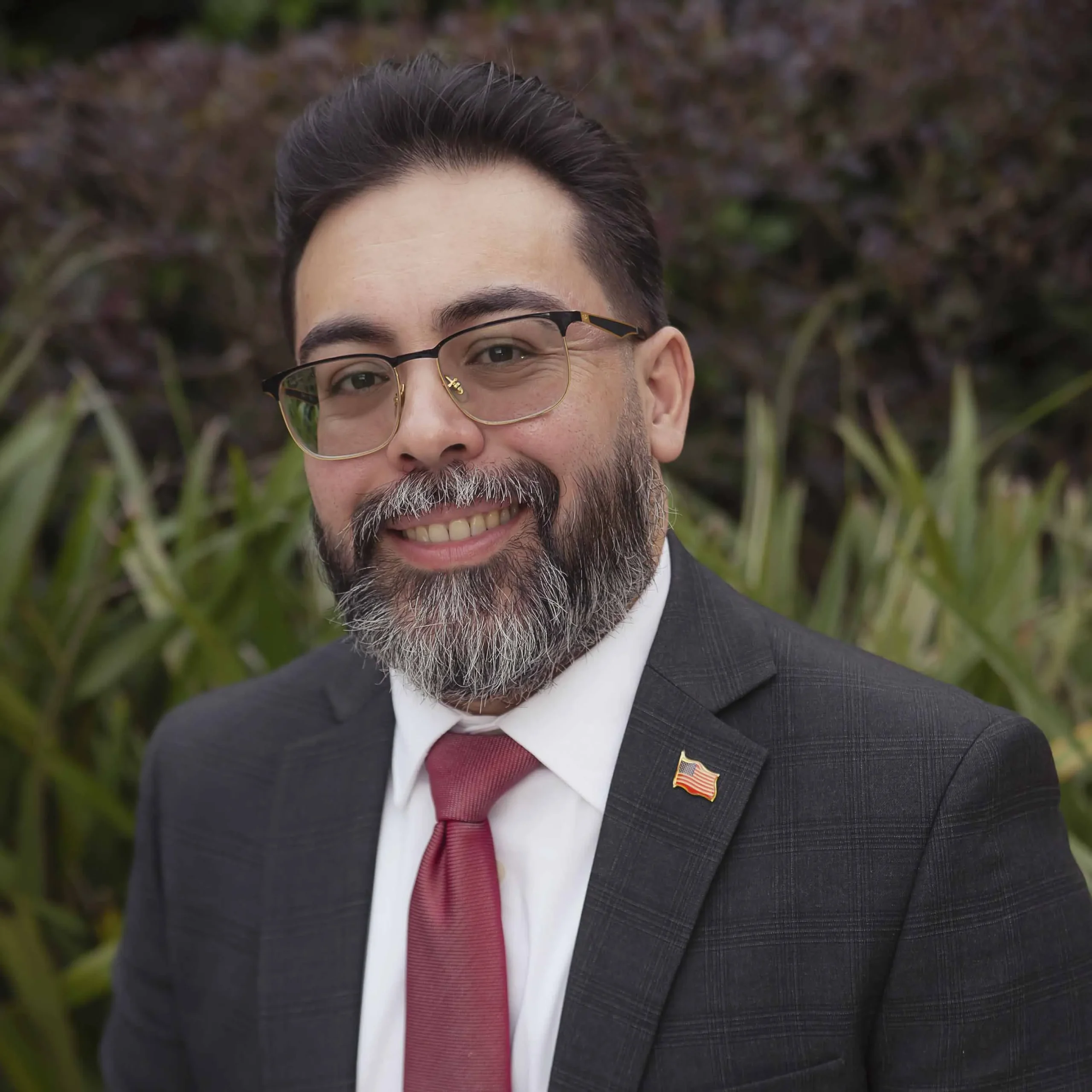
Orlando retail theft defense strategies include challenging surveillance evidence, questioning intent, and negotiating withholds of adjudication to protect a client's record. The AM Lawyer, P.A., led by former prosecutor Pedro A. Matos and trial attorney Gilbert R. Arroyo, builds defenses designed for petit and grand theft charges across Orange and Osceola counties, available 24/7.

Key Takeaways

  • Retail theft charges in Florida carry serious penalties including fines, criminal records, and jail time.
  • Unauthorized merchandise taking manifests in multiple forms: customer shoplifting, employee theft, and online marketplace violations.
  • Former law enforcement insight combined with strategic defense protects your record and future outcomes.
  • The AM Lawyer, P.A. provides aggressive defense for petit, grand, and retail theft charges in Orlando.

What Will You Accomplish With This Defense Guide?

This guide equips Orlando residents, visitors, and college students accused of shoplifting with a clear roadmap for protecting their rights. Grand theft, petit theft, and felony property charges filed in Orange or Osceola County demand an aggressive, immediate defense response, not a wait-and-see approach. Fines, a permanent criminal record, and jail time are all realistic outcomes once a retail theft allegation reaches the courtroom, so understanding the stakes early changes how a case unfolds.

What should someone do immediately after a shoplifting accusation in Orlando?

Anyone facing an accusation inside an Orlando retail store should avoid giving statements to loss prevention staff or police beyond basic identification. Confidential case evaluations remain available around the clock, meaning a defense conversation can start the same night an arrest occurs. Acting fast preserves evidence and options that disappear with delay.

Is a consultation required before hiring a defense lawyer?

No payment or commitment is required to discuss a retail theft allegation. A free consultation lets the accused understand the charge before deciding anything. That conversation typically covers:

  • The specific statute and degree of charge involved
  • Potential penalties, including fines and jail exposure
  • Early defense strategies suited to the facts of the arrest
  • Realistic timelines for resolving the case
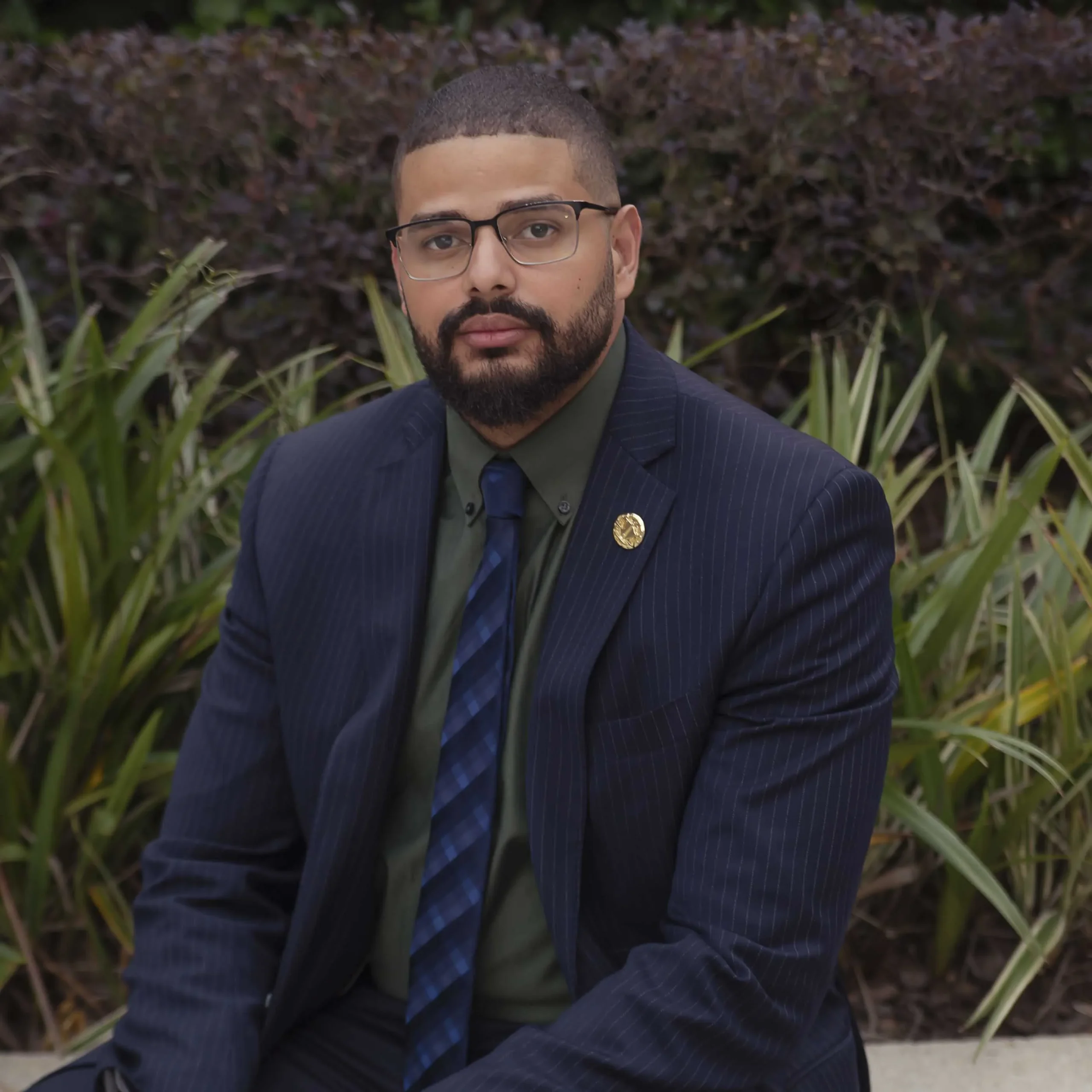
Retail theft defense in Orlando built on this foundation provides the accused with a better chance for a favorable outcome. A shoplifting lawyer in Orlando who understands local court procedure turns confusion into a concrete plan. For many first-time arrests, a focused petty theft defense in Orlando strategy can mean the difference between a lasting record and a case resolved quietly.

What Are Florida's Retail Theft Charge Levels?

Florida theft charges fall across a wide spectrum, starting at a second-degree misdemeanor for merchandise valued under $100 and climbing to a first-degree felony for grand theft exceeding $100,000. The gap between those two endpoints matters enormously for anyone accused inside an Orlando retail store. A shoplifting stop that appears minor at the register can still lead to a formal charge, a court date, and a permanent record if unaddressed.

Florida Statute 812.014 defines theft as knowingly obtaining or using another person's property with intent to deprive the rightful owner of it, whether the deprivation is temporary or permanent. Value of the item drives the classification, but intent and prior record shape sentencing exposure too. That statutory language applies uniformly, whether the alleged incident happened at a Colonial Drive shopping plaza or a mall along International Drive.

How does the dollar amount affect the charge?

Alleged ValueCharge Level
Under $100Second-degree misdemeanor
$100 to higher thresholdsVaries by amount and circumstances
Exceeding $100,000First-degree felony (grand theft)

Prosecutors in Orange and Osceola County build cases around the dollar figure first, then layer in circumstances like prior theft history or alleged use of a device to defeat security tags.

What does strong retail theft defense orlando representation involve?
Effective representation for retail theft defense in Orlando starts with reviewing surveillance footage, loss-prevention reports, and the valuation method used by store staff. Attorneys handling theft matters, from misdemeanors through serious felony charges, work the 9th Judicial Circuit daily and know how local prosecutors evaluate these files. A focused response is important in the first days after an arrest, particularly for petit theft and felony property allegations in Orange or Osceola County.

What Should You Do Immediately After Being Accused?

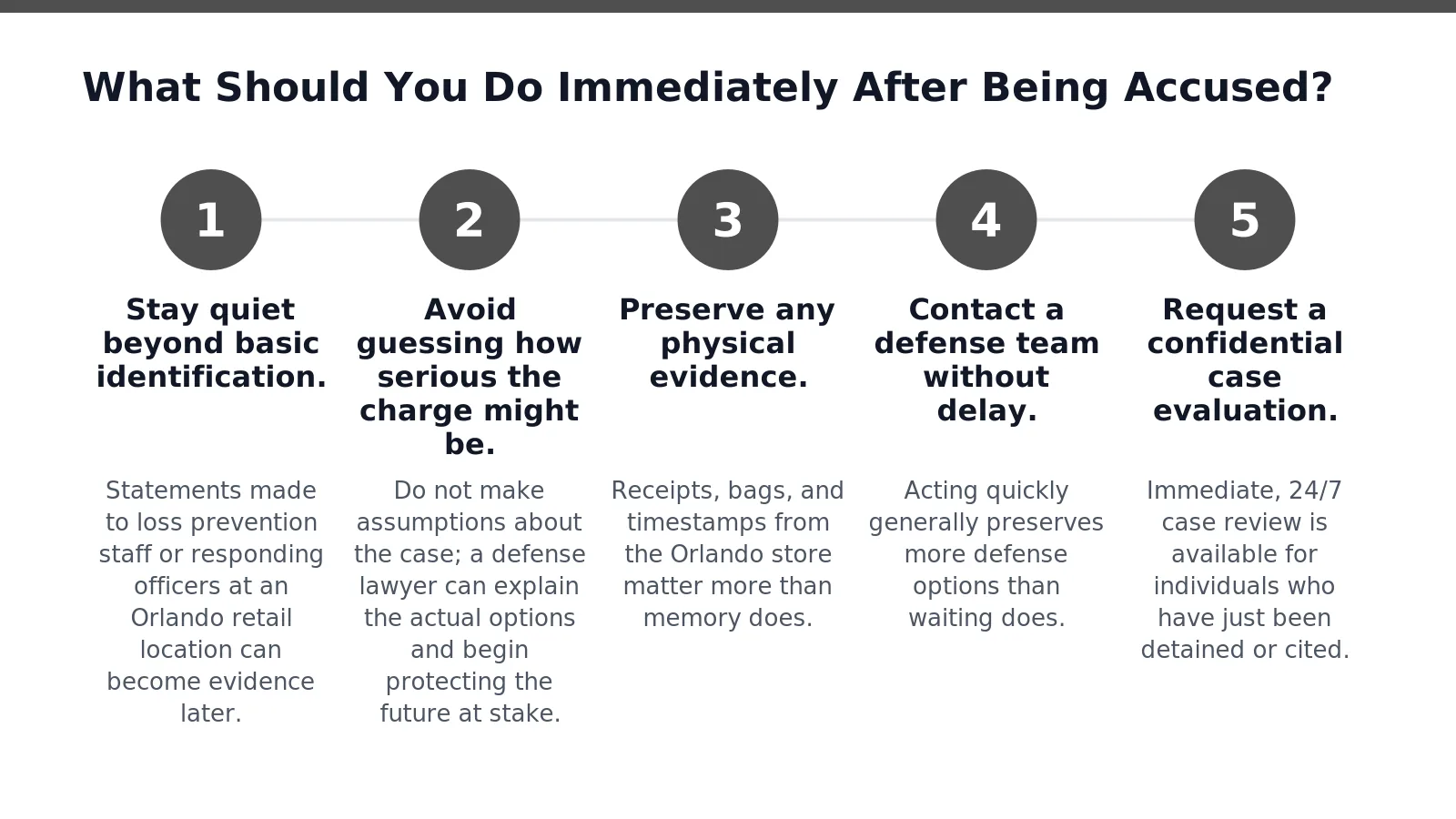
Five concrete steps protect an accused person's rights and options in the hours after a shoplifting accusation in Orlando. Silence comes first: say nothing to store security or police beyond identifying information. Assumptions about case strength come second, and they belong nowhere near a self-assessment before counsel weighs in.

  1. Stay quiet beyond basic identification. Statements made to loss prevention staff or responding officers at an Orlando retail location can become evidence later.
  2. Avoid guessing how serious the charge might be. Do not make assumptions about the case; a defense lawyer can explain the actual options and begin protecting the future at stake.
  3. Preserve any physical evidence. Receipts, bags, and timestamps from the Orlando store matter more than memory does.
  4. Contact a defense team without delay. Acting quickly generally preserves more defense options than waiting does.
  5. Request a confidential case evaluation. Immediate, 24/7 case review is available for individuals who have just been detained or cited.

Who handles these cases in Orlando's courts?

A bilingual defense team, led by a former prosecutor and a trial attorney, ensures the protection of your constitutional rights throughout the 9th Judicial Circuit, which covers Orlando and surrounding Central Florida courts. That prosecutorial background matters because it reveals how the state builds a shoplifting case before the defense ever sees it.

Why does timing matter so much?

Evidence disappears, witnesses forget, and surveillance footage gets overwritten within days at most Orlando retailers. Retail theft defense Orlando strategies depend on preserving that footage before it's gone. A shoplifting lawyer Orlando residents consult early can request evidence holds and begin building a petty theft defense Orlando courts will take seriously, long before an arraignment date arrives.

How Do You Challenge Loss Prevention Evidence?

Challenging loss prevention evidence starts with questioning how store staff documented the alleged incident. Retail theft, defined under Florida law as unlawfully taking merchandise without payment, hinges on proof of intent and proper documentation, and that proof is often far weaker than it first appears.

Surveillance footage, incident reports, and witness statements form the backbone of most Orlando shoplifting cases. Yet cameras miss angles, reports contain errors, and store employees sometimes misidentify shoppers or misjudge intent. A seasoned retail theft defense orlando team knows where these gaps typically appear.

What Mistakes Do Loss Prevention Officers Commonly Make?

Loss prevention staff often rush incident write-ups immediately after a stop, leading to inconsistencies between the written report and the actual footage. Some officers also fail to capture a clear view of the merchandise in question, weakening the store's case considerably.

Scrutinizing this evidence requires courtroom experience. Attorney Gilbert R. Arroyo's trial background, combined with former prosecutor Pedro A. Matos's insight into how these cases get built, allows a shoplifting lawyer orlando defendants trust to examine footage chain-of-custody and report timing with precision.

Defense counsel typically follows this sequence when reviewing a case:

  1. Request all surveillance footage, not just the clip loss prevention selected.
  2. Compare the written incident report against the video timeline for discrepancies.
  3. Interview available witnesses separately from store personnel.
  4. Identify whether intent was properly documented or merely assumed.

This process applies whether the charge is a petty theft defense orlando matter or a felony-level accusation. Strategic review of evidence collection matters at every charge level. A 24/7 confidential case evaluation lets an accused shopper get footage and reports reviewed before memories fade or evidence disappears.

How Can You Dispute Intent In Your Case?

Florida Statute § 812.014 defines theft as knowingly obtaining or using another person's property with intent to deprive the owner of it, either temporarily or permanently. That single word, "knowingly," gives defendants the clearest path to a strong defense. Prosecutors must prove intent beyond a reasonable doubt. Gaps in that proof create real opportunities for dismissal or reduced charges.

An Orlando client accused of walking out of a store with unscanned merchandise may have simply forgotten an item at checkout, lost track of a child's cart, or misunderstood a self-checkout prompt. None of these scenarios reflect criminal intent, even though they resemble theft on security footage. Effective retail theft defense orlando strategy starts by picking apart the state's narrative piece by piece.

What Evidence Challenges a Theft Allegation?

Surveillance footage, receipts, and witness statements often tell a more complicated story than store security reports suggest. A skilled shoplifting lawyer orlando defendants trust will scrutinize timestamps, employee observations, and prior interactions with loss-prevention staff for inconsistencies.

Does a Former Prosecutor's Perspective Matter?

Understanding how the state builds an intent case from the inside sharpens the defense from the outside. Insight drawn from prosecutorial experience helps anticipate which evidence carries weight at trial.

Attorneys tailor strategy by case type:

  • Petty theft defense orlando matters involving low-value items, focusing on mistaken-identity or accidental-removal arguments
  • Felony-level grand theft allegations requiring deeper evidentiary review
  • Repeat-offense cases needing historical context and procedural challenges

Every theft charge demands individualized evaluation, since no two circumstances carry identical intent questions.

What Pretrial Diversion Options Exist In Orange County?

Orange County prosecutors sometimes allow qualifying defendants to resolve a petit theft or felony property accusation without a permanent conviction. Retail theft defense orlando strategies often center on steering a case toward dismissal or a withhold of adjudication, a resolution that keeps the charge eligible for later sealing or expungement. For a student or visitor arrested at a local store, that distinction can mean the difference between a clean record and years of background-check problems.

Early intervention matters most. Petit theft and felony property allegations call for aggressive defense action from the outset. The earliest stages of a case often determine whether diversion remains on the table. Waiting too long to respond narrows the available options.

How does a free consultation factor into diversion eligibility?

A free consultation gives an accused person the chance to review the facts of the arrest and discuss whether diversion applies before any formal decisions get made. A shoplifting lawyer orlando residents consult early can flag procedural issues or negotiate alternatives before charges harden into a conviction.

What happens if diversion isn't pursued quickly?

An unaddressed theft accusation rarely stays contained. It can snowball into lost employment, public booking photos, and a lasting criminal record.

Steps to protect diversion eligibility:

  1. Secure counsel immediately after arrest or notice of investigation.
  2. Request a free consultation to assess petty theft defense orlando options.
  3. Discuss whether dismissal or withhold of adjudication fits the case.
  4. Move toward sealing or expungement once eligibility is confirmed.

How Does A Trial-Ready Attorney Build Your Defense?

A trial-ready attorney builds a theft defense by dissecting the prosecution's evidence before a plea is ever discussed. Former prosecutor Pedro A. Matos and trial attorney Gilbert R. Arroyo lead the bilingual defense team handling retail theft cases throughout the 9th Judicial Circuit. That prosecutorial background matters: understanding how the state builds a case reveals exactly where it can fall apart.

Shoplifting lawyer Orlando representation starts with a full review of surveillance footage, loss prevention reports, and witness statements. Weak identification, procedural errors, or improper stops inside an Orlando retail store often undercut the state's case before trial even begins. Strategic legal defense draws on former law enforcement insight when evaluating how store security and police handled the arrest.

What Steps Does A Defense Attorney Take After An Arrest?

  1. Review the arrest report and any store security footage for inconsistencies.
  2. Identify whether store employees or police followed proper detention procedures.
  3. Evaluate the item's claimed value against actual receipts or appraisals.
  4. Negotiate with prosecutors or prepare the case for trial, depending on the evidence.

Does Case Severity Change The Defense Approach?

Case severity shapes strategy significantly. Retail theft defense Orlando clients facing a misdemeanor charge need a different approach than those accused of felony-level grand theft. The defense team fights for clients day or night across both misdemeanor and felony theft allegations throughout the 9th Judicial Circuit, adjusting tactics as charges escalate.

Petty theft defense Orlando cases often hinge on small but decisive details, a receipt, a misread price tag, a miscommunication with staff. Operating as a bilingual law firm serving communities across Central Florida, the team ensures language barriers never compromise a client's ability to explain the full story. Trial readiness means negotiating from strength, not settling out of convenience.

What Mistakes Should You Avoid After An Accusation?

Four errors turn a manageable shoplifting case into a lasting burden: silence toward counsel, casual statements to loyalty officers, ignored court dates, and delayed legal review. Each mistake narrows the options available for resolving an Orlando theft allegation cleanly. Acting fast preserves leverage; waiting erodes it.

Does a theft accusation really follow someone for years?

Yes. Background checks expose even minor theft convictions, and employers or licensing boards routinely flag them during screening. A single Target or Walmart incident in Orlando can resurface during a job application years later. That risk alone makes retail theft defense orlando residents pursue early, rather than waiting until court dates loom.

What practical steps limit the damage?

  1. Stop talking to store security or police without counsel present.
  2. Contact a shoplifting lawyer orlando courts recognize before entering any plea.
  3. Gather receipts, texts, or witness names immediately, while memory stays sharp.
  4. Avoid posting about the arrest on social media.
  5. Attend every scheduled hearing, even for a seemingly minor citation.

Skipping these steps carries real financial consequences. Landlords and lenders routinely deny applicants with theft records, closing off housing and loan opportunities long after the case closes. A record affects more than a rental application; it can block future financing for a car or apartment.

Delay itself is a mistake. Confidential case evaluations remain available around the clock, meaning missing out on 24/7 consultation costs valuable response time during the critical early hours after arrest. Evidence disappears, witnesses forget, and plea deadlines approach quickly.

Petty theft defense orlando cases often hinge on early intervention. A free consultation reviews any missteps already made and clarifies what options remain, even if contact with counsel happens days after the incident rather than immediately.

FAQ

What should you do immediately after a shoplifting accusation in Orlando?

Avoid giving statements to loss prevention staff or police beyond basic identification. Confidential case evaluations run around the clock, so a defense conversation starts the same night an arrest occurs.

Does hiring The AM Lawyer, P.A. require payment upfront?

No payment or commitment precedes the initial discussion. The free consultation covers the specific statute, potential penalties, early defense strategies, and realistic timelines for resolving the case.

What determines the severity of a retail theft charge in Florida?

Merchandise value drives the classification under Florida Statute 812.014, ranging from a second-degree misdemeanor under $100 to a first-degree felony above $100,000. Intent and prior record further shape sentencing outcomes.

Conclusion

In closing, retail theft allegations demand immediate legal intervention to preserve your rights and protect your future. The difference between a resolved case and a lasting criminal record often hinges on decisions made within hours of arrest. Early consultation with experienced defense counsel reveals weaknesses in the prosecution's evidence, clarifies your options for diversion or dismissal, and positions you to move forward without the burden of a conviction. Your case deserves the same thorough, trial-ready approach whether charges are minor or serious. Act now to reclaim control of your outcome.