

Key Takeaways on Drug Sentencing Alternatives in Orlando
- Florida law provides sentencing alternatives that help defendants avoid incarceration for drug offenses in Orlando.
- Alternative sentencing programs address overcrowded prisons by redirecting nonviolent offenders toward treatment and rehabilitation services.
- Sentencing alternatives enable individuals charged with drug crimes to pursue court-approved options instead of jail time.
- Orlando courts recognize that rehabilitation programs serve defendants better than traditional incarceration for substance-related offenses.
What Will You Accomplish With This Guide?
How Does Legal Guidance Fit Into This Process?
- How diversion programs differ from drug court and probation
- What eligibility factors Orange County typically considers
- Why timing a motion for alternative sentencing matters
- When to call for a confidential case review

What Alternatives to Incarceration Exist in Orlando?
How does drug diversion work in Orlando?
Are there drug court alternatives in Orlando for repeat offenders?
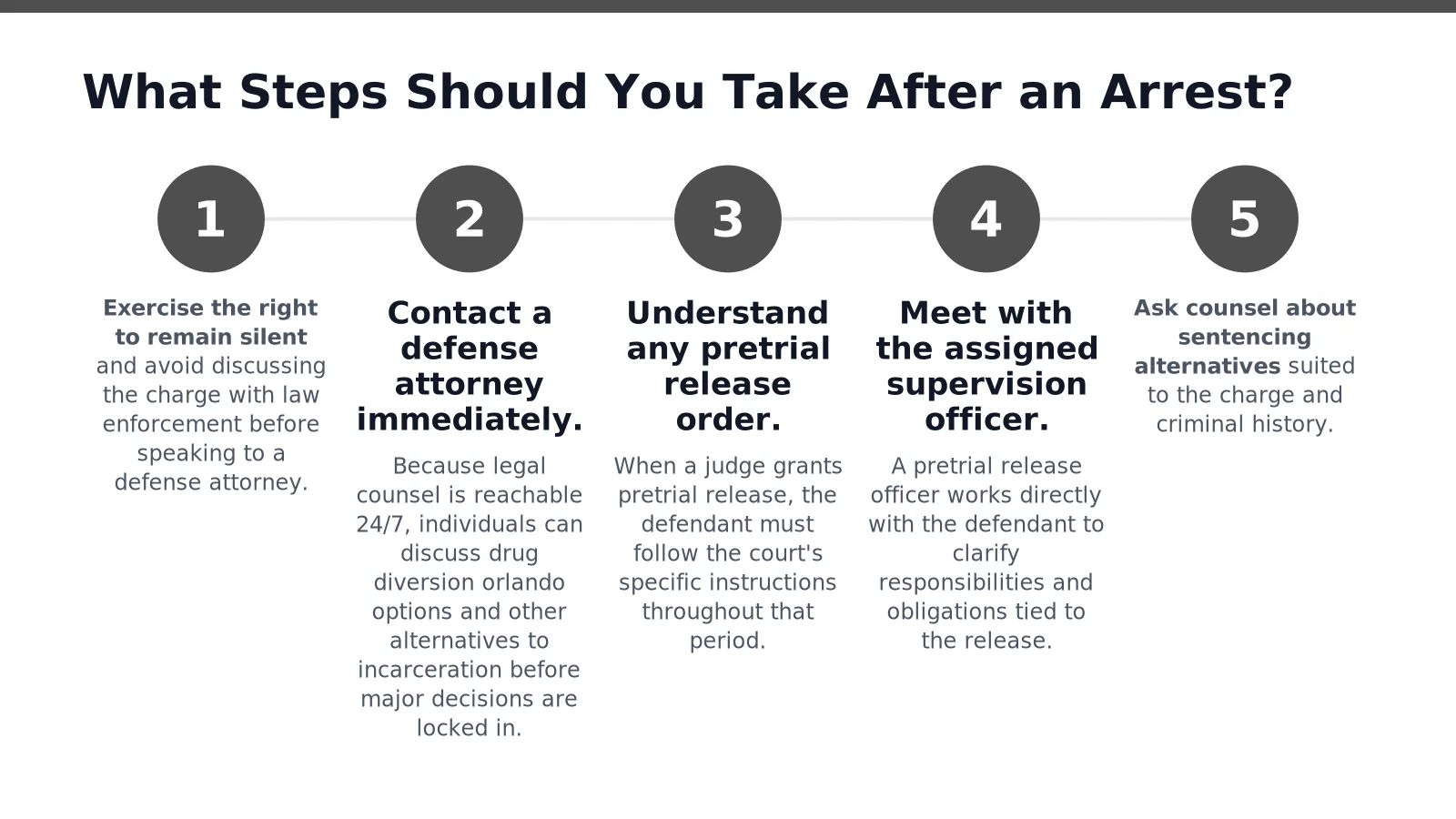
What Steps Should You Take After an Arrest?
- Exercise the right to remain silent and avoid discussing the charge with law enforcement before speaking to a defense attorney.
- Contact a defense attorney immediately. Because legal counsel is reachable 24/7, individuals can discuss drug diversion orlando options and other alternatives to incarceration before major decisions are locked in.
- Understand any pretrial release order. When a judge grants pretrial release, the defendant must follow the court's specific instructions throughout that period.
- Meet with the assigned supervision officer. A pretrial release officer works directly with the defendant to clarify responsibilities and obligations tied to the release.
- Ask counsel about sentencing alternatives suited to the charge and criminal history.
Can a Drug Charge Be Resolved Without Jail Time?
What Happens If Pretrial Release Conditions Are Violated?
How Do You Know If You Qualify for Drug Diversion?
Does the type of charge affect eligibility?
What's the first step toward finding out?
- Criminal history and any prior diversion participation
- Whether the charge involved violence or weapons
- Local prosecutorial tendencies for similar drug cases
- Whether probation for drug offense orlando courts impose fits better than diversion
What Is Pretrial Intervention and How Does It Work?
How does a defendant request pretrial intervention in Orlando?
- Review the arrest report and charging documents to confirm eligibility for a non-violent drug offense.
- Discuss the case and goals during a free consultation, since free consultations allow clients to discuss eligibility before entering any plea.
- Draft and file a motion requesting consideration for drug diversion in Orlando or a similar alternative program.
- Present the motion to the court and negotiate terms with the prosecutor's office.
- Guide the client through any resulting probation for a drug offense in Orlando, including treatment or supervision conditions.
Why does timing matter for these motions?
How Does Drug Court Serve as an Alternative Here?
Who Qualifies for Drug Diversion in Orlando?
What Does Drug Court Actually Replace?
- Probation for a drug offense in Orlando, with regular check-ins and drug testing
- Community service hours tied to program milestones
- Work release arrangements that preserve employment
- Restitution payments where applicable
- Inpatient drug, alcohol, or psychiatric treatment
What Does Probation for a Drug Offense Involve?
- Scheduled meetings with a probation officer
- Random or periodic drug screenings
- Participation in substance abuse treatment or counseling
- Payment of court costs, fines, or restitution
- Maintenance of employment or enrollment in school
- Avoidance of further arrests or law violations
How Does a Drug Offense Probation Officer Monitor Compliance?
Can an Attorney Help Before Probation Terms Are Set?
What Mistakes Could Jeopardize Your Eligibility?
Does a compliance slip-up during supervision end eligibility?
Can language barriers cause a violation?
- Delaying contact with defense counsel after arrest
- Ignoring supervision deadlines or reporting requirements
- Misunderstanding court instructions due to language gaps
- Assuming nonviolent charges carry no long-term risk